

Polysomnography (PSG) or Sleep Study is a diagnostic test for sleep-related breathing disorders. During PSG, the patient sleeps while connected to a variety of monitoring devices that record the changes data of sleep pattern. PSG is most commonly used in the diagnosis of obstructive sleep apnea syndrome (OSAS), and evaluating other sleep disorders that can exist without OSAS.
What is Polysomnography (PSG) for?
Your doctor will order a PSG if he or she thinks you have sleep apnea or a different condition. Examples of other sleep-related conditions include those that make you:
- Have an uncomfortable feeling in your legs when you try to fall asleep, or sudden jerking leg movements while you sleep
- Feel very sleepy during the day and fall asleep all of a sudden
- Do odd things while you sleep, such as moving your arms and legs, shouting, or walking
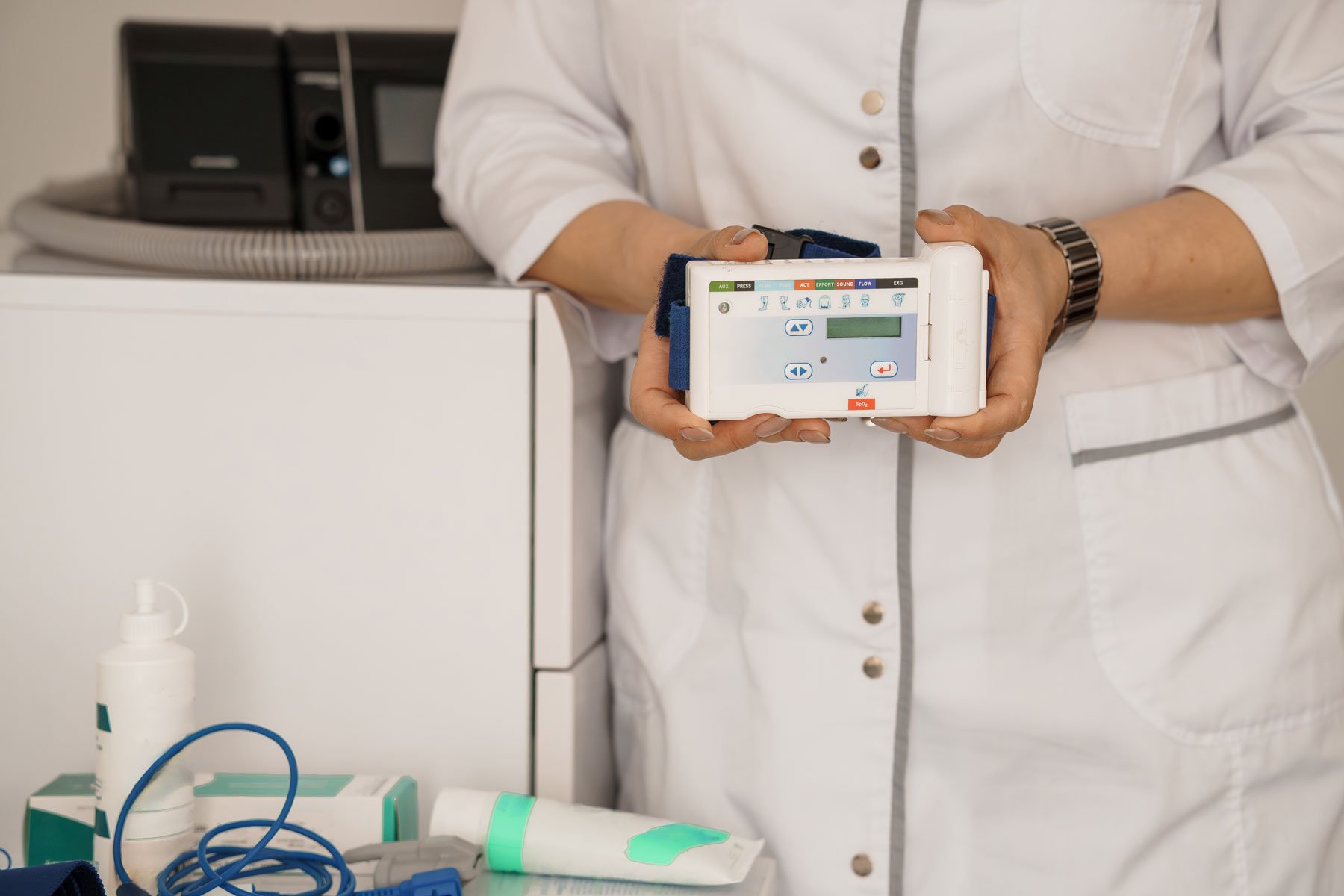
How is the test conducted?
Before you go to sleep, a technician attaches small, sticky patches called “electrodes” to your head, chest, and legs. A small tube will be placed beneath your nose and 2 belts will be wrapped around your chest and abdomen. The sleeping room is usually equipped with an infrared camera that allows the technician to see you without entering the room. Physiologic variables are recorded digitally on a computerized system while you sleep and during any intervening wakefulness.
How should you prepare for the test?
- Maintain normal daily activities and avoid taking naps (unless it is part of your usual routine) on the day of your PSG.
- Avoid consuming food and beverages containing caffeine such as coffee, tea and coke after lunch. Limit your water intake after dinner.
- Do not have alcoholic beverages within six hours of your bedtime.
- Take a shower/bath, wash and dry your hair before your PSG. Please do not use any hair products such as gels and wax.
- Remove nail polish, nail stickers or other decorations on your fingernail and do not wear any make up.
- Take all of your regular medicines, unless your doctor tells you not to. Inform your doctor if you are under any medication and the prescribed dosage. Do not take sleeping pills as sleep enhancing medication may affect the outcome of your study unless instructed by your doctor.
- Wear comfortable clothes for the PSG. Shirt which opens in the front is most preferable. The hospital offers a set of pyjama and basic toiletries during your overnight stay.
- Pacemakers, defibrillators and other assistive devices are usually not contraindicated to the test.
- If you have active respiratory infections with significant nasal congestion and coughing, you should reschedule after recovered.
- If you have acute pain treated with high-dose opioids that you do not usually take, you should reschedule.
Care after the procedure
- Once you are fully awake, you will be disconnected from the test machine.
- The data collected from the test will be interpreted by a specialist and the report will be sent to your doctor directly. Please follow the discharge and follow up plan as instructed by your doctor or nurse.
The information provided in this article is for reference only and does not replace professional medical advice. Matilda International Hospital and Matilda Medical Centre shall not be held responsible for any decisions made based on this information.